
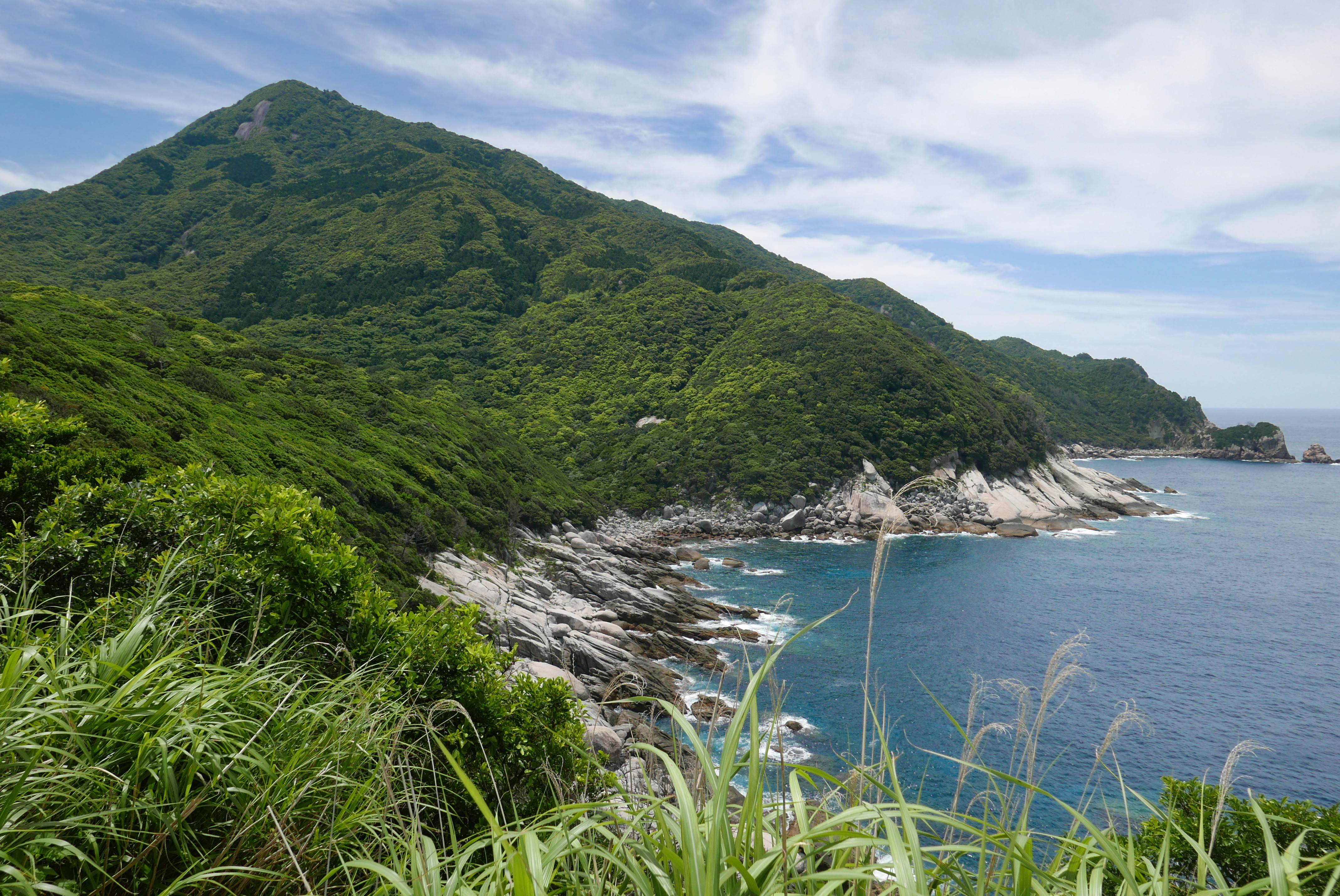
A remote island off the southern tip of Kyushu, Yakushima is known for its ancient, moss-covered cedar forests, with their branches and roots twisting in such bizarre forms that they look as though they’re alive. Adding to that are dramatic coastlines and spectacular waterfalls, making Yakushima a natural wonder of Japan.
“Welcome to Yakushima!” Kouki, my guide and an avid naturalist, greeted me as I stepped out of the hydrofoil ferry terminal. The sea crossing was a bit rough, but I considered myself lucky as the sun hung high behind a clear blue sky. For an island that “rains 35 days a month”, that is considered rare. Obviously, this local citation is exaggerated, yet Yakushima is indeed the wettest place in the Japanese archipelago, with rainfall ranging from 3,000 mm to 10,000 mm a year. I can’t help but smile. It seems that Yakushima had decided to show me its best.
I first learnt about Yakushima through the animated masterpiece Princess Mononoke by Studio Ghibli. The island’s mystical woodland was the visual inspiration for the film’s most prominent scenes. Director Hayao Miyazaki and his artists depict this place as the abode of the gods, where nature reigns supreme. Here, moss wraps everything in a thick blanket of emerald green, from massive intertwining roots and trunks to granite rocks and boulders. A mountain stream gently flows through the lush landscape, giving respite to birds, deer, and forest spirits.
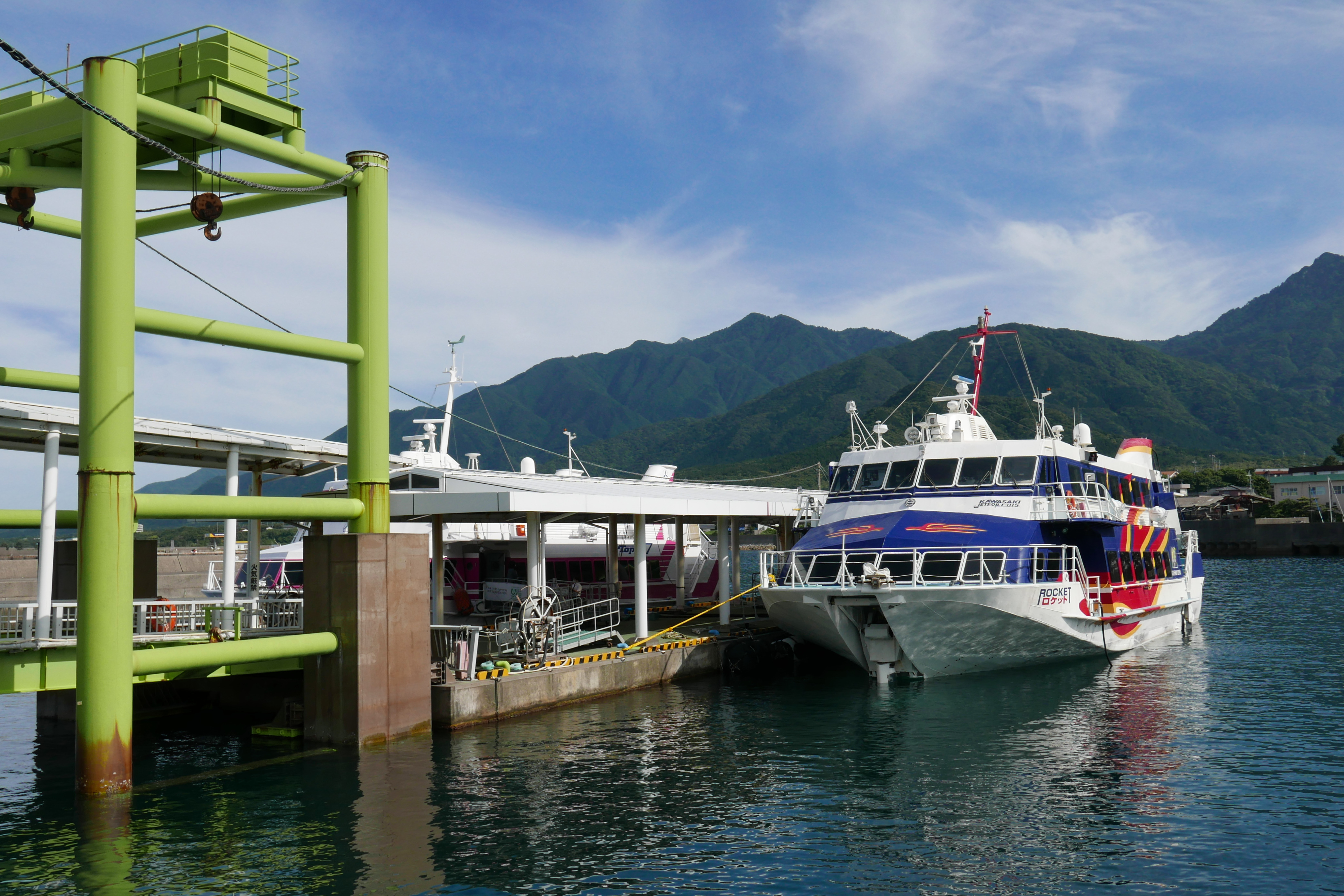

Yakushima Overview
In reality, Yakushima is a compact, rocky island located about sixty kilometers off the southernmost tip of Kyushu. Think of it as a gigantic granite outcrop that rises out of the ocean, with peaks as high as 2,000 meters at its core. This mountainous terrain combines with the Kuroshio Current – which transports warm water northward to Japan from the Philippines – to bring heavy rainfall to the island, especially the interior. And subsequently, it formed evergreen forests, gushing rivers, and majestic waterfalls.
Compact yet so diverse, Yakushima features a range of climates and ecosystems.
Though small, Yakushima features a range of climates, from hot and humid on the coasts to chilly in the high mountains. This, in turn, creates a vertical spectrum of ecosystems, with vibrant subtropical plants along the bouldery coastline, temperate woodlands and cedar trees on the slopes, and tangles of shrubs and dwarf bamboos near the summit. The topography is compressed yet so diverse and unique that UNESCO designated Yakushima as one of Japan’s first World Heritage Sites in 1993.
But Yakushima wasn’t always like that. The verdant island was nearly stripped bare in the Edo period, with ancient cedar trees being cut and hauled off the mountains without machinery or mercy. Some trees were so big and dense that the wood wouldn’t split, so villagers shaved the heartwood into sheets for roofing tiles. The logging continued up until the late 1960s, when a conservation program was strictly implemented. It successfully saved one-fifth of the primeval forest and protected many centuries-old cedars, including the legendary Jomonsogi – a Japanese cedar tree between 2,000 and 7,200 years old. Additionally, thanks to extensive replanting and reseeding, shades of green have returned to the once desolate landscape.


1. The Coastal Ring Road
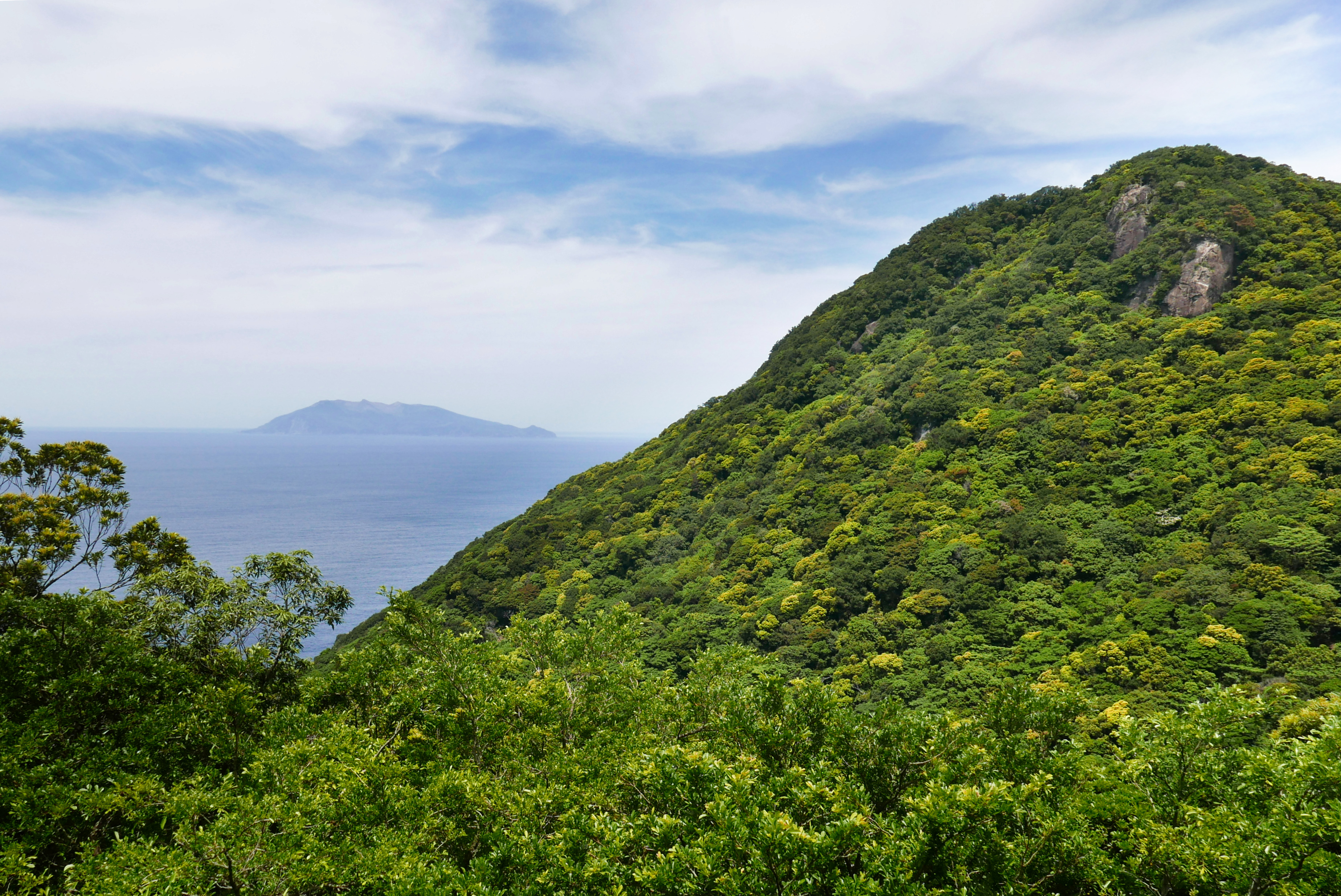
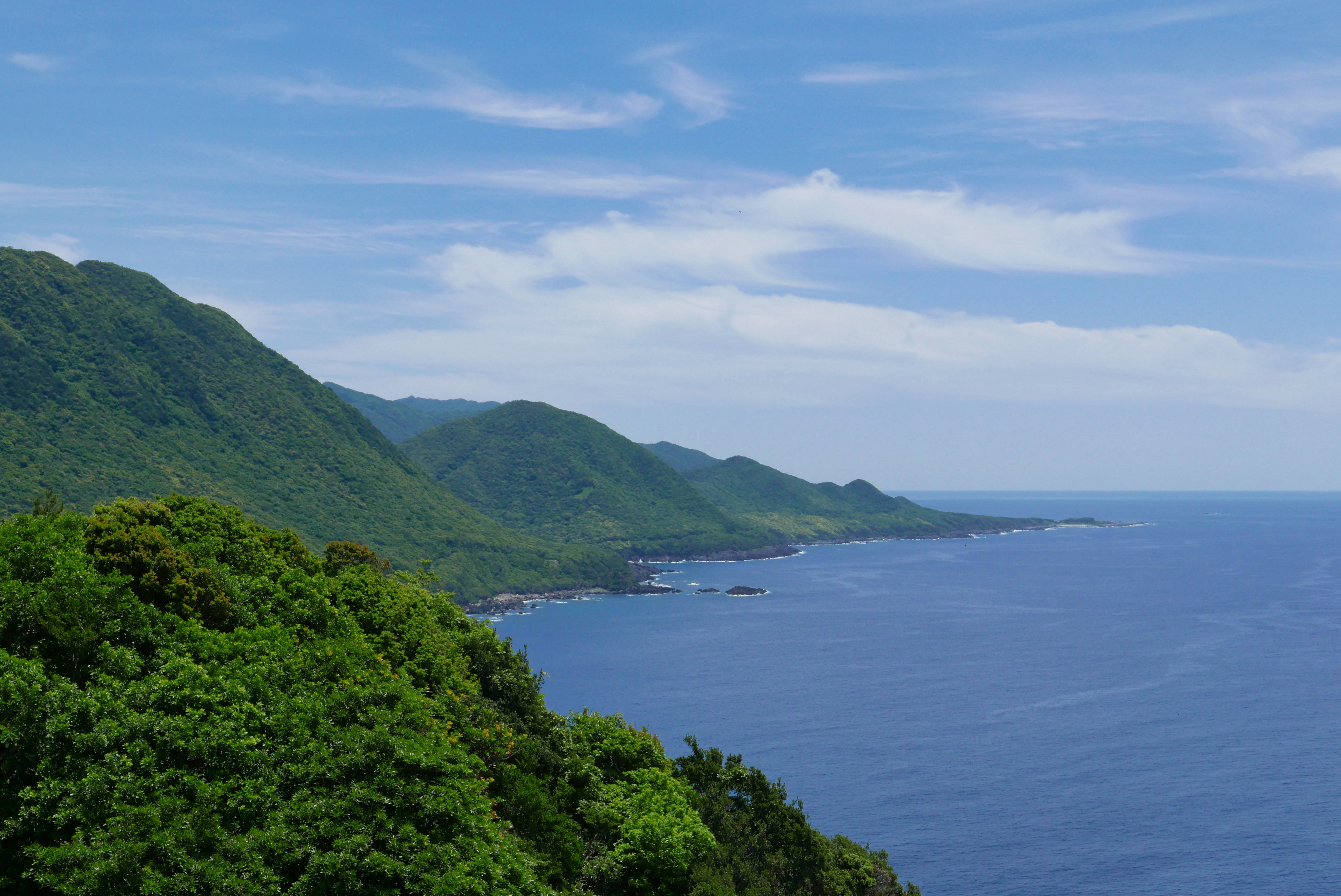
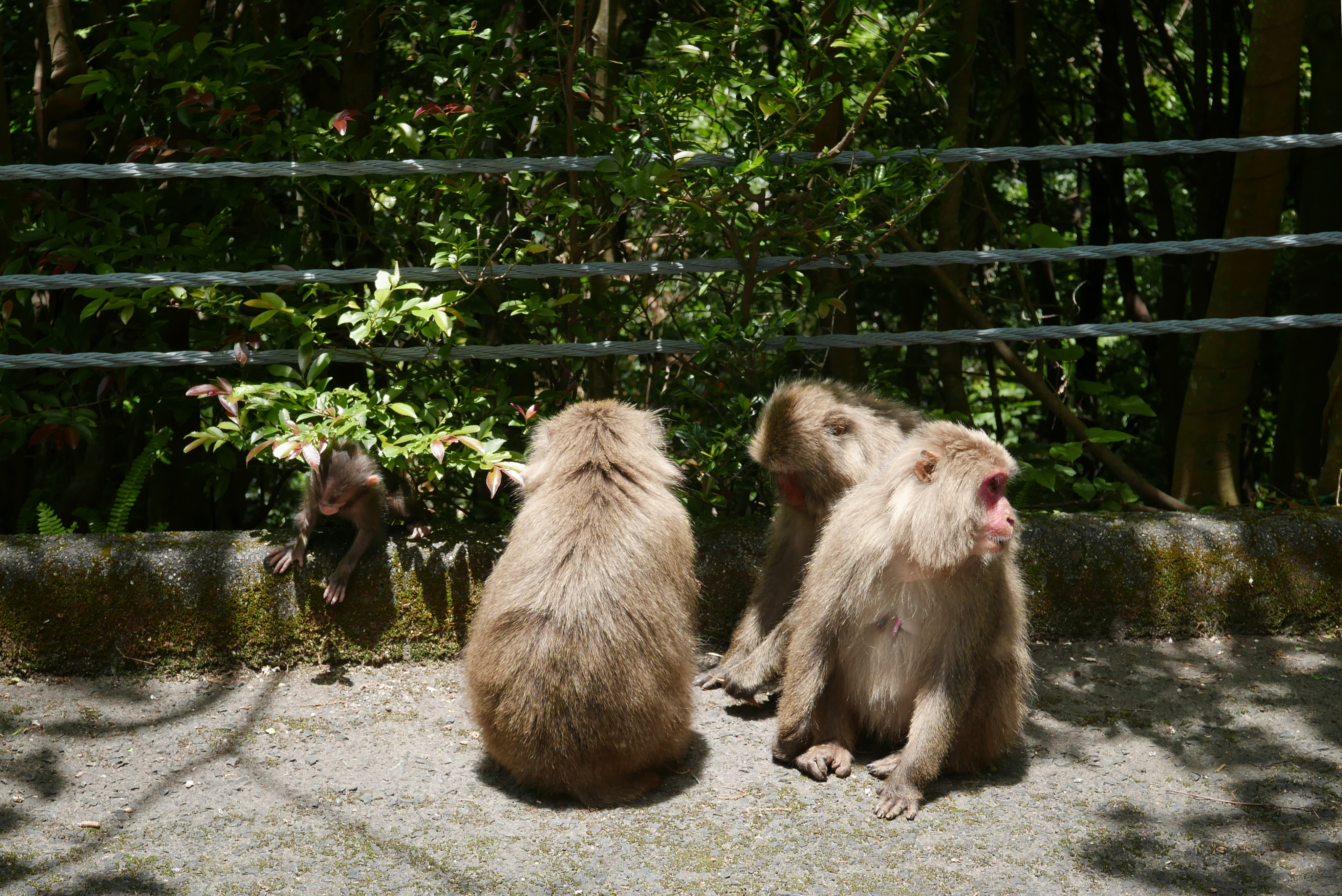
My journey began with a scenic drive around Yakushima’s perimeter, passing through a heady mix of coastal villages, woodlands, and dramatic cliffs. The northwestern stretch, named Seibu Rindo, is particularly beautiful as it meanders through the dense, broadleaf forests within the UNESCO World Heritage Site. It’s a popular site to observe the native wildlife, including the Yakushima macaques, distinct for their red faces and buttlocks. I had seen macaques before, but never like this: a whole family was lounging together across the dry asphalt, while others were grooming themselves along the guardrails. They were so secure and unhurried in their place that an approaching car didn’t even register as a threat. This forest patch is also home to the Yakushima sika deer – smaller cousins of those in Nara or Miyajima. They grazed silently on the mountain slope, camouflaging into the forest floor.
Several bends earlier is Nagata Inakahama – the island’s largest sandy beach and major nesting ground for green and loggerhead turtles. Further north, near Cape Yahazu, stands the vermilion torii of Yahazudake Shrine. The sacred gate marks the entrance to a vast natural sea cave, which is home to the gods of fishing and marriage. It’s also said to be the former hideout of pirates in the East China Sea.
A mix of coastal villages, turquoise coves, forests, and dramatic cliffs.
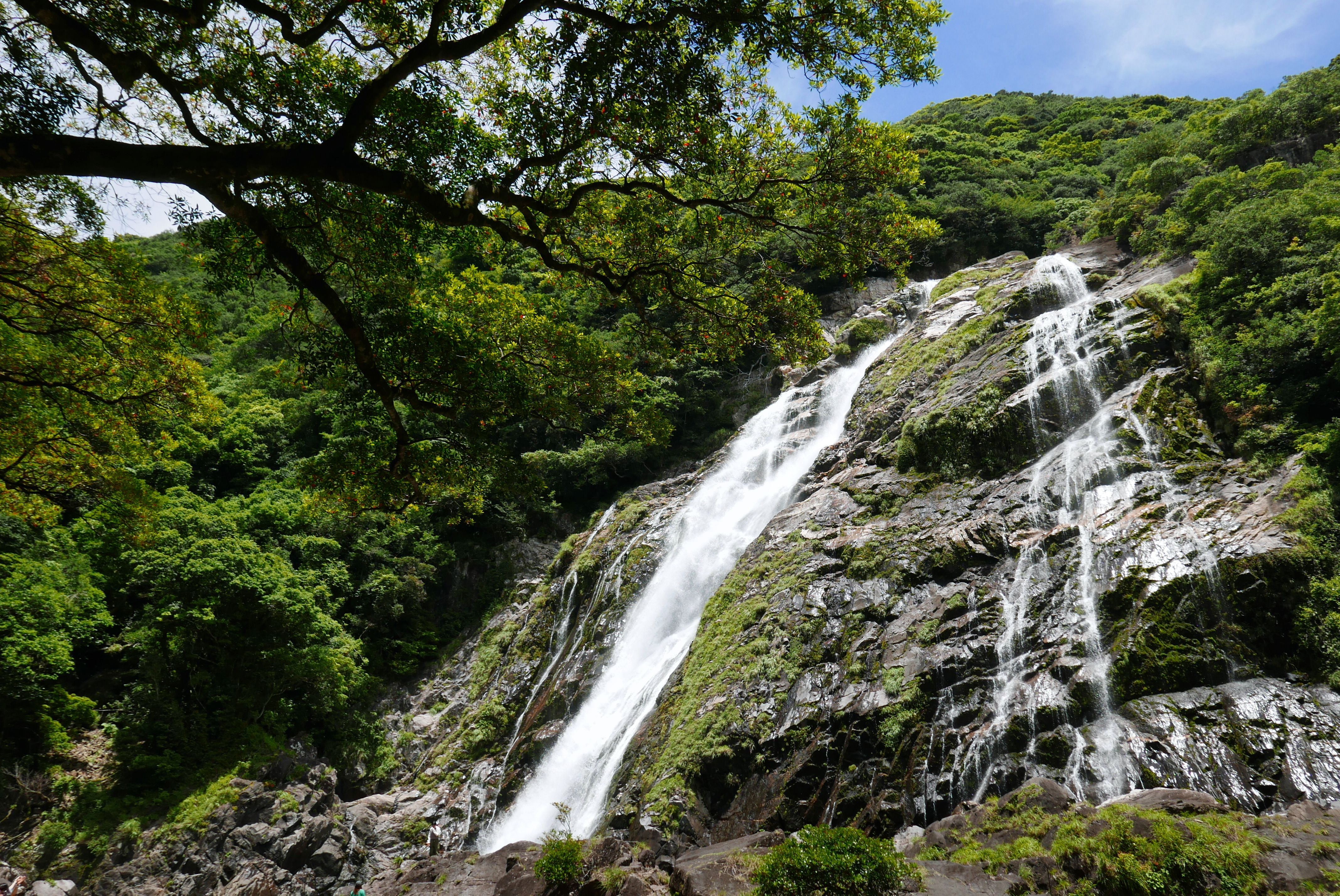
As we curved southward along the coastal road, thick forest gave way to the thundering sound of water plunging 88 meters into the granitic cliffs. We were at Okonotaki – one of Japan’s most spectacular waterfalls. It’s actually a double waterfall, with the cascade becoming even more dynamic after days of rainfall. As I edged closer to the water walls, spray and mist hit me hard on the face, yet I couldn’t help but crane my neck to see nature’s full force.
My island circuit continued with verdant slopes, turquoise bays, and bucolic farms. It ended at a quaint tea plantation that offered the best matcha soft serve I had ever tried. The creamy, subtly sweet, and mildly bitter aftertaste perfectly matched the view of the jade-colored tea leaves.
Good to Know: The coastal ring road is 132 kilometers long, and a non-stop drive will take approximately three hours. The road is in excellent condition. Only the Seibu Rindo section requires extra caution, as it’s narrow and winding. Adding to that is the gathering of macquases, often right in the middle of the track.



2. Shiratani Unsuikyo Ravine
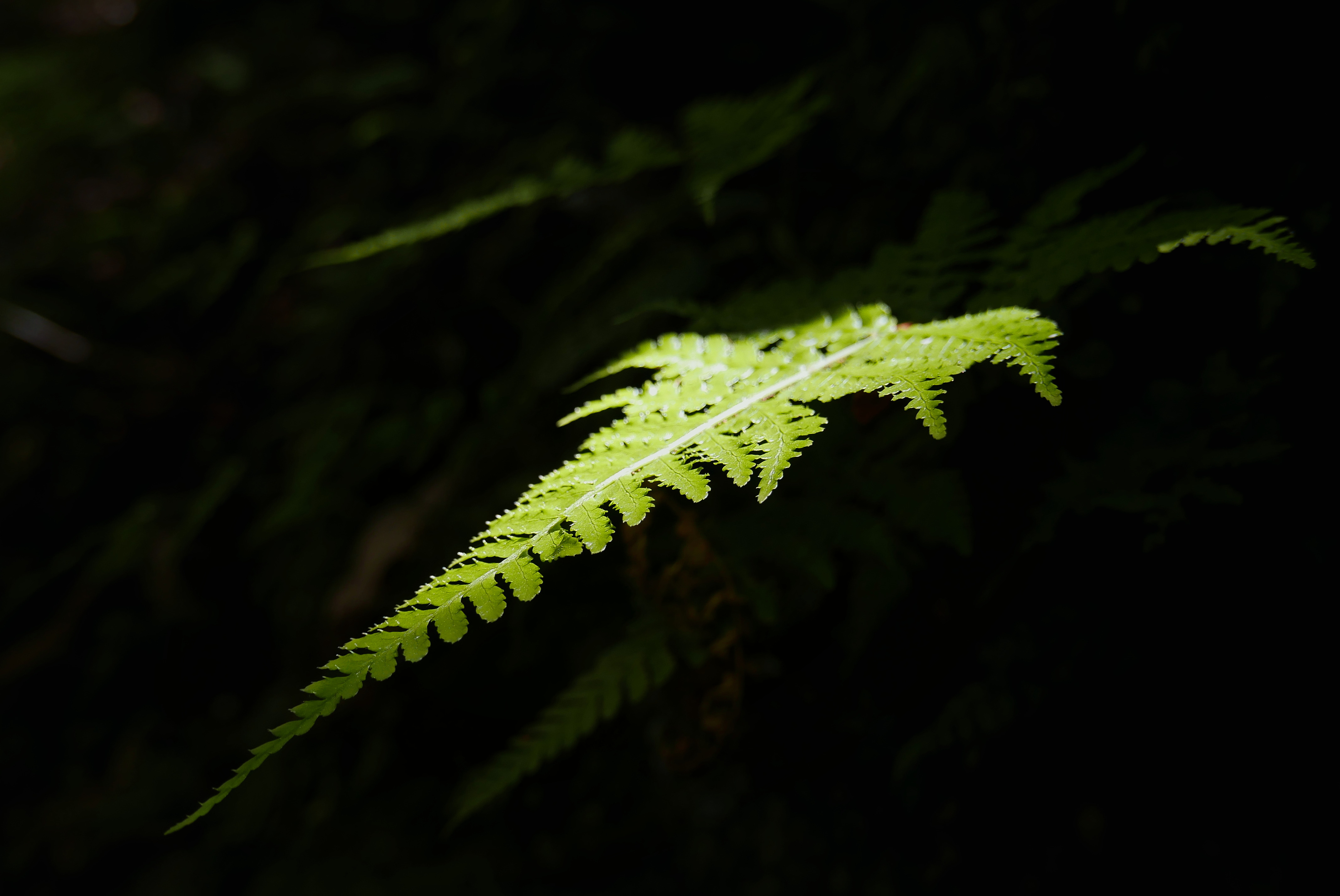
The next morning, I found myself in Shiratani Unsuikyo – Yakushima’s most celebrated forest, which runs along a gorgeous ravine. It was early May, and summer had already enveloped this area in its firm grip. As far as my eyes could see, cedar trees shot skywards, peppering the fern- and moss-covered forest. The trees aren’t very tall, yet they are thick and stumpy, with vivid green saplings growing around. Abundant rain, high humidity, and the mosses actually help nurture these young trees. After several decades, these trees will age and give rise to another generation – a testament to Yakushima’s resilience and vitality.
As I walked on the moss-heavy track, my gaze was fixed on the ground, where alienesque roots were intertwining. “They hold each other up”, Kouki said and pulled over so I could see for myself. At the base of the cedar trees, there’s barely any soil—just a lattice of roots grasping the granite and weaving into the roots of neighbouring trees. The whole forest is interconnected like a nervous system. They protect the ground from relentless rain and become the “bedrock” of this mystical forest.
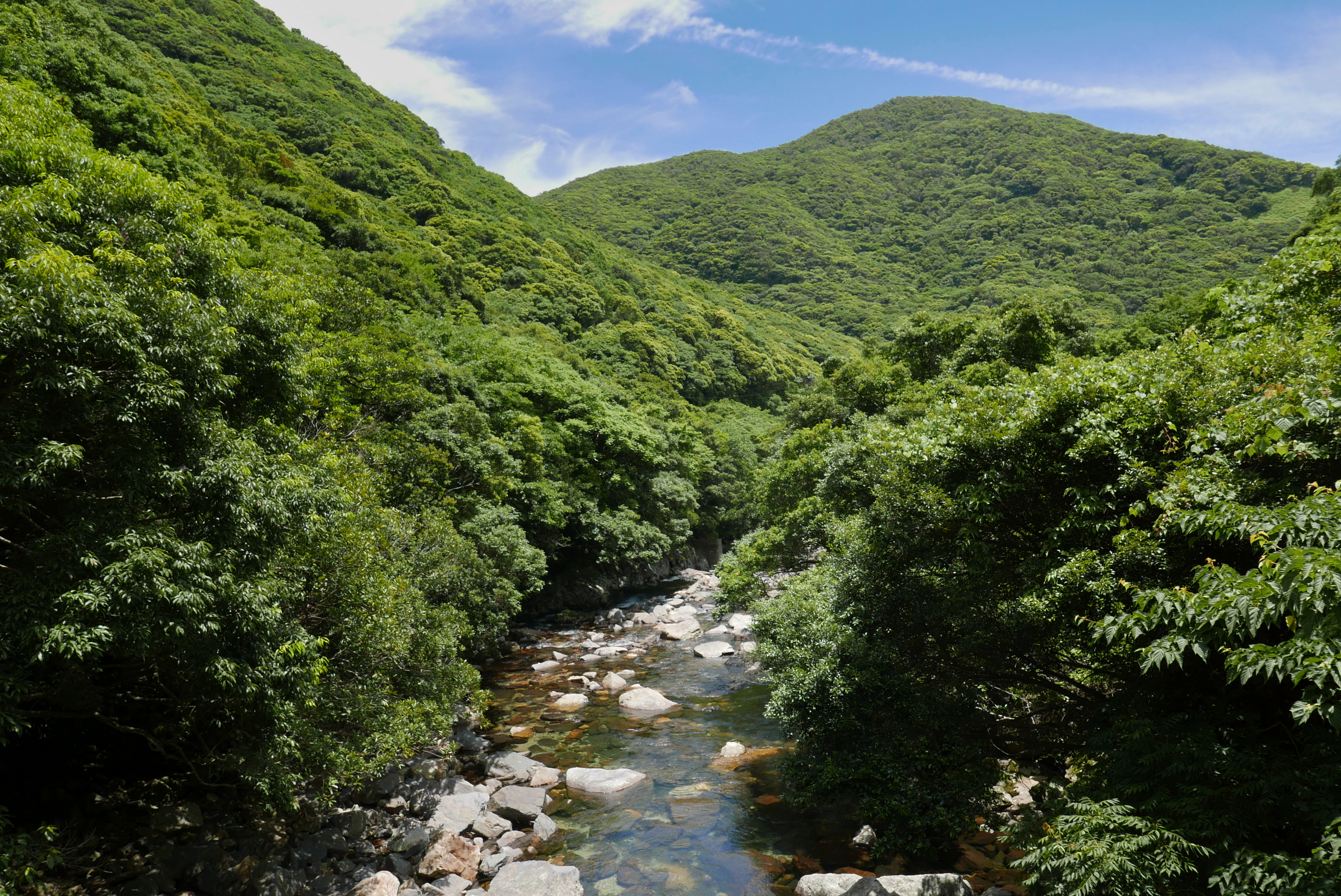
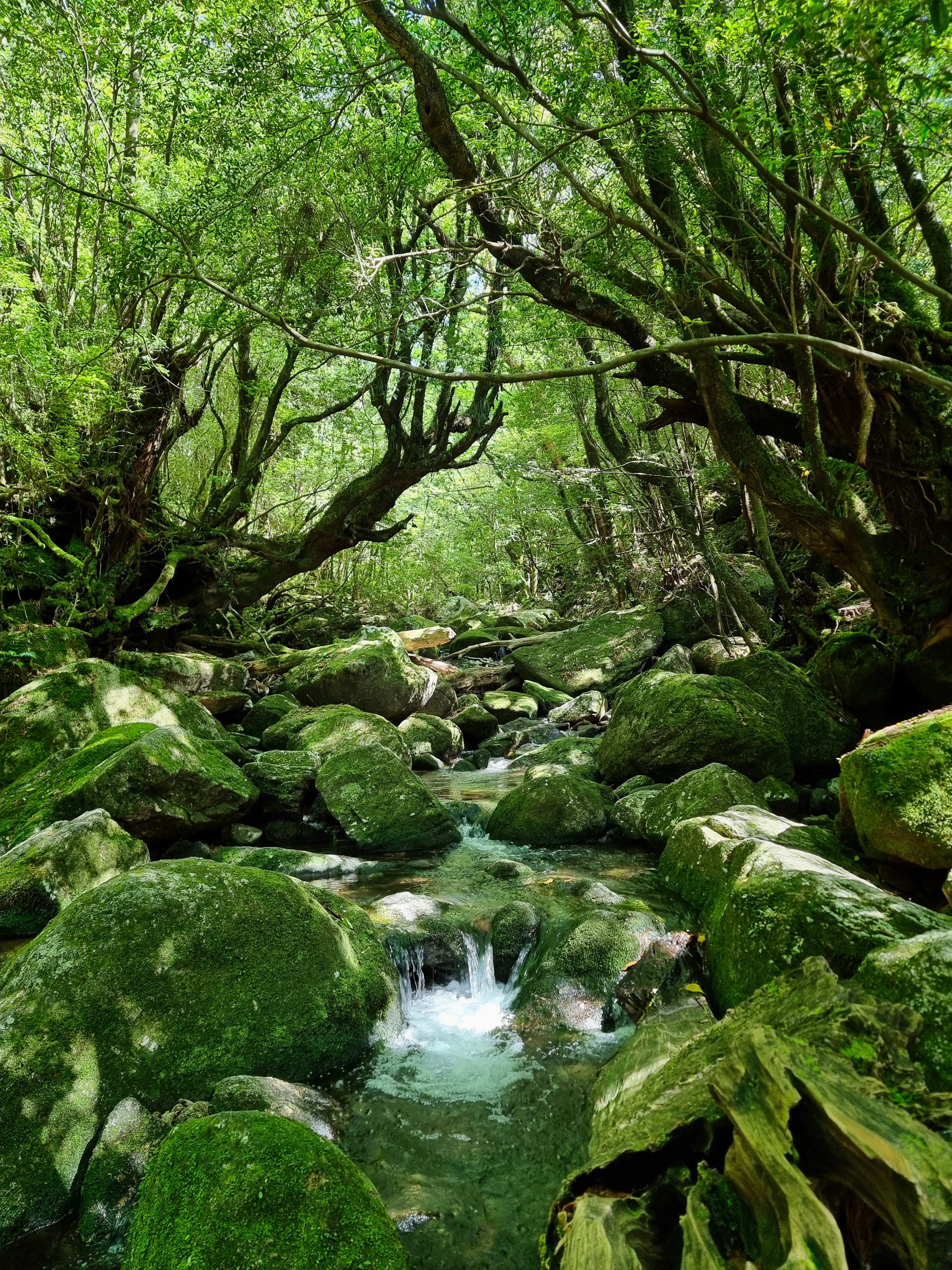
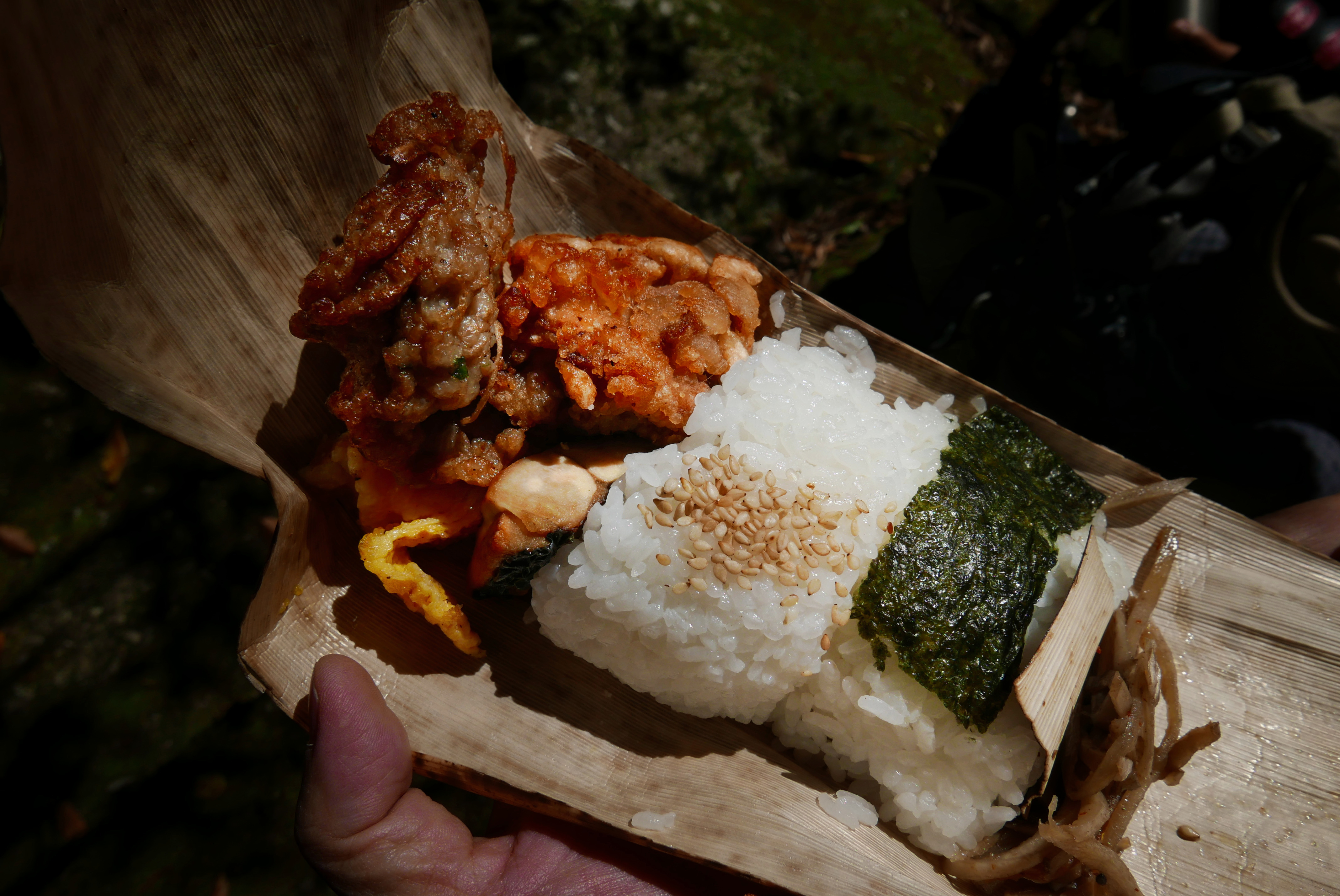
By midday, we reached a stream that flows gently between emerald-green rocks and cedar trunks for an onigiri-style lunch. It’s untouched – about as pure as water can get. “Have you been forest walking before?” asked Kouki as he extended his hand to me. I tiptoed onto the shifting rocks, trying to keep my balance while crossing the clear mountain stream. “No. But I’m glad I did”, I replied. This mindful walk in the Japanese wilderness offered me more than scenic views. It allowed me to experience nature with all my senses, from the flickering of sunrays, the damp of dewy mosses, the balsamic smell of cedars, the birdsong, to the soothing sound of water. Before I knew it, I had dissolved in nature.
A chance to experience the forest at its fullest.
Good to Know: Shiratani Unsuikyo offers multiple well-maintained hiking trails, varying markedly in length and difficulty, from the old logging track built during the Edo period to more developed ones paved in stone and wood. All routes wind between massive cedar trunks, past cold streams and moss-blanketed landscape—just like in Princess Mononoke. The mosses are very fragile; thus, avoid touching or stepping on them.



Tips for Visiting Yakushima
- Yakushima is accessible by hydrofoil ferry from Kagoshima. It takes between two and three hours to reach Miyanoura Port on the island’s northern side, depending on the number of stopovers. A car ferry is a good alternative if you want a smoother crossing. However, it takes twice as long. The island is also accessible by small turboprops from Kagoshima, Osaka, and Fukuoka.
- Please note that due to the unpredictability of Yakushima’s weather, transport to and from the island may be delayed or cancelled at the last minute. Thus, it would be wise to keep your itinerary loose.
- To explore Yakushima, it’s best to have your own vehicle as public transportation is scarce. Some parts, such as the Seibu Rindo, are not accessible by bus.
- If you’d rather not arrange everything yourself, Y.E.S. – a Yakushima-based travel agency – can handle it for you. With deep ties across the island, Y.E.S. delivers a range of services, from guided activities and car rentals to ferry and hotel bookings. The itinerary is bespoke, built on personal interests and the island’s mood. On Yakushima, that kind of flexibility is definitely worth it.


Yakushima looks and sounds like a beautiful, verdant island where the air and the water is pure and the rhythm of life is calm and peaceful. In your photos it actually appears almost tropical. I have yet to watch Princess Mononoke, and I have a feeling after watching it I might end up wanting to go to this island even more.
Haha, you will be lured to the island, like me 😛 The music alone is enough to do that. Personally, I prefer these old movies over Studio Ghibli’s latest works. The new ones are too complicated and confusing.
You are right. Due to its location, a large part of Yakushima is tropical, similar to that of the Ryukyu archipelago. The only difference is that Yakushima’s interior features high mountains.